
Unlocking Human Potential Through Authentic Leadership
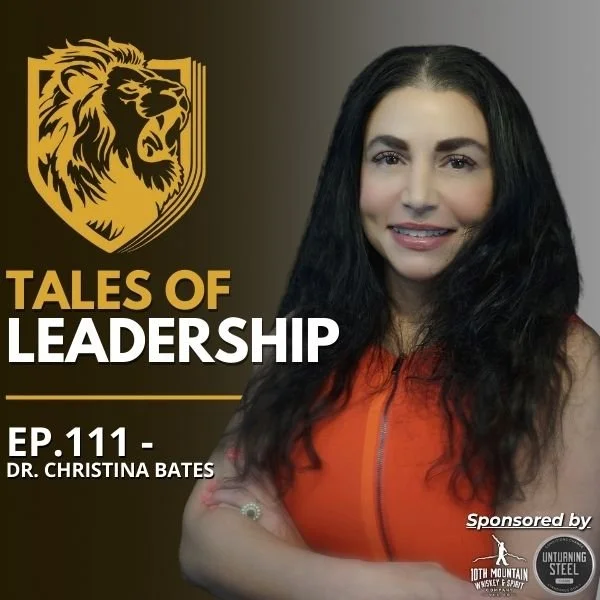
Featuring Christina Bates | Tales of Leadership Podcast Ep. 111
This episode dives deep into one of the most powerful and often overlooked aspects of leadership—unlocking human potential through authenticity, communication, and trust. Christina Bates brings a unique blend of academic insight and real-world consulting experience to break down what truly separates effective leaders from the rest.
At its core, leadership is not just about direction—it is about understanding people. Leaders must be able to read environments, interpret behaviors, and help individuals make sense of their role within the organization. This is what Christina describes as “sensemaking”—the ability to process complex environments and guide others through them. Great leaders do not just lead people—they help people understand themselves and their environment.
One of the most powerful concepts in this conversation is the idea of “radar leadership.” Leaders are constantly scanning their environment, filtering out noise, and identifying what truly matters. Every interaction—no matter how small—is an opportunity to gather data, build trust, and influence outcomes. The best leaders are not passive—they are actively observing, processing, and adapting in real time.
Communication is the vehicle that makes this possible. Authenticity, transparency, and clarity are not just buzzwords—they are requirements. Leaders must be genuine in who they are, open in their intent, and clear in their messaging. But beyond that, they must tailor their communication to the individual. Not everyone processes information the same way, and effective leaders adapt their approach accordingly. If you cannot communicate in a way others understand, you cannot lead effectively.
Trust is built in the small moments, not the big ones. While formal meetings and structured engagements matter, it is the everyday interactions—the hallway conversations, the quick check-ins, the unplanned exchanges—that define a leader’s impact. These are the moments where people feel seen, heard, and valued.
Another critical takeaway is the importance of preparation. Leaders must master their craft before entering any interaction. When preparation is complete, it creates mental space—allowing leaders to observe, adapt, and respond instead of simply reacting. Without that preparation, leaders become reactive and miss critical signals in their environment.
Christina also highlights the importance of empathy—not sympathy, but true empathy. Leaders must take people as they are, not as they wish them to be. This requires understanding individual motivations, backgrounds, and perspectives. When leaders do this well, they can bridge gaps, align teams, and unlock potential that would otherwise remain hidden.
A key distinction discussed is transactional versus transformational leadership. Transactional leadership views people as means to an end, while transformational leadership focuses on developing individuals to reach their full potential. While both have their place, lasting impact comes from transformation. Leaders who focus on developing people create organizations that outperform those focused only on results.
Ultimately, leadership is about enabling others. The most effective leaders are not those who seek the spotlight, but those who create it for others. They build environments where individuals can grow, contribute, and thrive—and in doing so, elevate the entire organization.
Final Thoughts
Authentic leadership is not about having all the answers—it is about asking the right questions, reading the environment, and unlocking the potential within others.
Leaders must be intentional in how they communicate, consistent in their values, and committed to understanding the people they lead. Trust is built through small, consistent actions over time, and that trust becomes the foundation for everything else.
If you want to lead at the highest level, focus less on controlling outcomes and more on developing people.
After Action Review (AAR)
Are you actively “reading the room,” or are you focused only on your own agenda in leadership interactions?
How are you building trust in the small, everyday moments with your team?
Are you leading transactionally for results, or transformationally to develop people?
Tales of Leadership Mission: To develop Purposeful Accountable Leaders (PAL)
by arming you with the tools required to lead with purpose, integrity, and accountability.
More Exclusive Content







Jason “Buzz” Lewis is a retired U.S. Army Lieutenant Colonel, coach, mentor, and leadership practitioner with more than 26 years of experience developing people and leading organizations. Today, he serves through youth sports, faith-based leadership development, and business consulting while co-founding Home Team Standard alongside his wife, Des. His passion is helping strengthen the homes, teams, and relationships that shape future leaders.