
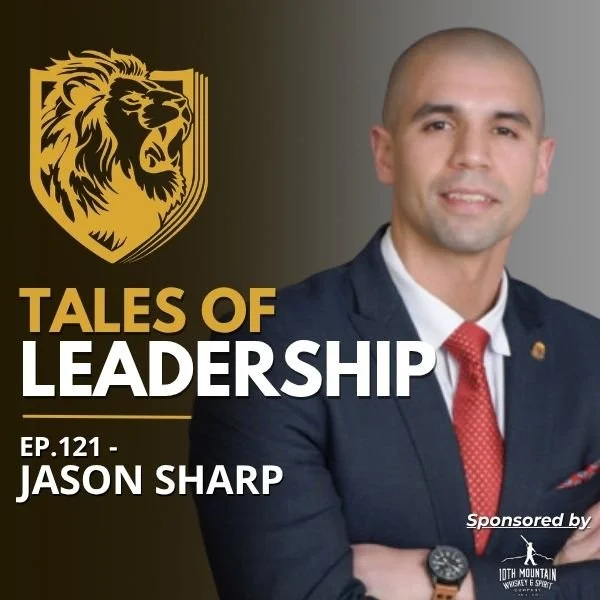
#121: Jason Sharp — Learning to Suffer, Learning to Lead
What If Suffering Is Your Path to Growth?
Featuring Jason Sharp | Tales of Leadership Podcast Ep. 121
Here’s the highlighted version with the key leadership points selectively bolded:
Jason Sharp’s story is one of suffering, survival, trust, mentorship, grit, and transformation. A Chicago native, businessman, author, soldier, and founder of Sharp Leadership, Jason has lived a life shaped by hardship—but not defined by it. He is an infantry company commander in the Kansas Army National Guard, the author of Eyes Wide Open: Learning to Suffer, and a leader whose life has been built around development, growth, and mentorship.
His journey began in circumstances most people would struggle to imagine. Jason grew up in Chicago with a father who spent much of his early life in prison and a mother battling addiction. He lived on the streets, ate out of dumpsters, moved through shelters and foster homes, and learned at a young age what it meant to survive. In many ways, suffering was not an occasional event in Jason’s childhood. It was the environment.
But Jason’s story is not about remaining trapped in pain. It is about what happens when pain is turned into purpose.
One of the strongest leadership lessons from this episode is the importance of focusing on effort instead of outcomes. Jason explains that leaders must create environments where people can fail without becoming failures.
“Allow our people to fail without becoming a failure.”
That idea should challenge every leader. Too often, leaders become obsessed with the outcome—the metric, the number, the final result, the win. But outcomes are downstream from effort, systems, processes, and people. If a leader only praises results, people learn to protect themselves, avoid risk, and hide mistakes. But when a leader praises effort, discipline, preparation, and learning, people begin to grow.
This does not mean standards disappear. It means leaders understand that growth requires room to stumble. A purposeful, accountable leader does not excuse poor effort, but they also do not permanently label someone by a single failure. They teach, correct, coach, and develop.
Jason’s life is proof of that lesson.
As a child, Jason learned not to trust easily. One story from his past centered on receiving a bike, only to wake up and find it gone—likely sold by his mother to feed her addiction. That moment taught him a brutal lesson: what is true today may not be true tomorrow. For a young person, that kind of betrayal can harden the heart quickly. It can teach a person to rely only on themselves, trust no one, and treat the world like a threat.
For a long time, that is how Jason survived.
But survival and leadership are not the same thing. Survival may keep you alive, but leadership requires trust. It requires the courage to let others in. It requires the humility to recognize that even the strongest people need help.
That shift began through mentorship. Jason met Dr. Yael Sedon, who became a surrogate mother figure and one of the first people to see beyond the walls he had built around himself. She saw a young man who was angry, guarded, and shaped by the streets, but she also saw potential. When Jason made a mistake and violated trust, she did not discard him. She corrected him. She showed disappointment, but she also showed him that failure did not have to be final.
That experience became foundational to Jason’s leadership philosophy. Great mentors do not ignore mistakes, but they also do not reduce people to their worst moment. They see what someone can become and help them move toward it.
Another major turning point came through St. John’s Northwestern Military Academy. For Jason, going to the academy was one of the first major “sliding door” moments in his life—an opportunity that opened and required a decision. Saying yes meant leaving behind his siblings and carrying the guilt of stepping away from the people he loved. But it also meant breaking a cycle. It meant choosing a path that could change the trajectory of his family.
Jason understood something many people miss: opportunities often arrive wrapped in discomfort. They rarely show up when everything is convenient, settled, and easy. Sometimes the door opens at the exact moment fear is loudest. The question is whether you step through it.
At St. John’s, Jason also met Brian Galarza, another mentor who helped shape him. Jason describes Yael and Brian as the shoulders he has stood on throughout his life. Yael helped form his moral compass. Brian helped shape the values that guided him into manhood.
That is the power of mentorship. One person can see what you cannot see in yourself. One person can help interrupt a destructive pattern. One person can hold you to a standard long enough for you to start believing you are capable of meeting it.
Jason’s time at the academy also reinforced the importance of standards and accountability. In one story, Jason confronted a senior cadet who was selling tobacco to younger students. Jason saw it as his responsibility to protect those younger cadets and uphold the standard. The confrontation escalated, and Jason expected to be punished. Instead, the academy leadership recognized that beneath the rough exterior was a young leader trying to protect others.
That story carries an important leadership truth: leadership is not a popularity contest. Leaders are responsible for the standard. When leaders walk past behavior they know is wrong, they silently approve it. Over time, that silence becomes the new culture.
Correcting people is uncomfortable. Holding the line is uncomfortable. Being misunderstood is uncomfortable. But leadership requires the courage to protect people, protect standards, and make corrections before small compromises become organizational decay.
Jason’s journey through Ranger School brought another layer to the conversation: shared suffering. Ranger School is designed to push leaders physically, mentally, and emotionally. For Jason, recycling Florida Phase was crushing, but it also became one of the most beneficial experiences of his life. It humbled him, taught him more, and reunited him with people who had suffered alongside him.
Shared suffering creates bonds that comfort never can. When people endure hardship together, trust deepens. They learn who keeps moving when tired, who helps carry the load, and who refuses to quit when things get miserable.
That lesson applies far beyond the military. Families, teams, businesses, and communities are all shaped by how they respond to adversity. A team that only knows comfort will fracture when pressure comes. But a team that has endured hard things together can develop a level of trust and resilience that cannot be manufactured in easy times.
Another powerful lesson from Jason’s story is the danger of believing you have to carry everything alone. During flight school, Jason was battling cancer. He had been through chemotherapy, believed he was in remission, and later learned the tumor was still there, crushing his lung and limiting his body. Yet his instinct was still to push forward alone.
He had spent so much of his life surviving without help that asking for help felt unnatural. He said he had never really used the words, “Will you help me?” That mindset nearly broke him. After crashing his car while trying to drive home from chemotherapy by himself, Jason had to confront the truth: strength is not refusing help. Sometimes strength is finally admitting you need it.
That is a lesson every leader needs. Leaders often carry the burden quietly. They tell themselves they have to be the strong one, the steady one, the one with answers. But isolation is not leadership. A leader who never asks for help eventually models the wrong kind of strength.
Jason learned that people were willing to help, but he had been the one saying no. That realization changed him. It taught him not to reject support before others even had the chance to offer it.
The final major theme from Jason’s story is reflection. After cancer, after military training, after the disruption of the life he had planned, Jason found himself lost. He was disconnected, angry, and struggling to maintain meaningful relationships. So he did something dramatic. He went to the Ice Age Trail in Wisconsin.
After spending six weeks inside during his stem cell transplant and medical treatments, Jason chose to spend six weeks outside. He planned a thousand-mile hike, calculated his food, carried what he needed, and created space to be alone with his thoughts. During that journey, he spent long stretches without seeing another person. He read. He wrote. He reflected. That is where the early work of his book began.
The wilderness became a place of healing.
Many leaders avoid silence because silence forces confrontation. When the phone is gone, the noise stops, and the distractions fade, you are left with yourself. That can be uncomfortable, but it is also where growth begins. Jason’s journey reminds us that suffering does not automatically create wisdom. Reflection does.
Pain alone can make someone bitter. Pain processed through reflection can become purpose.
Jason captured that idea with a simple question: what makes your heart sing? That question is different from asking what you are good at, what pays well, or what looks impressive to others. It forces you to examine alignment. What gives your life meaning? What pulls you forward? What allows you to serve others from a place of conviction rather than obligation?
For Jason, suffering became the path that helped him find that answer.
Final Thoughts
Jason Sharp’s story is a powerful reminder that leadership is not built in comfort. It is forged in suffering, shaped by mentors, strengthened through shared hardship, and refined through reflection.
He grew up in circumstances that could have easily defined the rest of his life. But through key mentors, hard choices, military service, illness, wilderness, and faith in the process of growth, Jason turned pain into purpose. His life shows that suffering does not have to be the end of the story. When processed with humility, gratitude, and reflection, suffering can become the very thing that prepares you to lead others.
Leadership is not about avoiding pain. It is about learning from it. It is about helping others fail without becoming failures. It is about stepping through sliding doors when opportunity appears. It is about protecting standards, asking for help, and creating enough silence to hear what your soul is trying to tell you.
Jason’s story proves that growth often begins where comfort ends.
Key Takeaways:
Focus on effort, not just outcomes — when leaders build people, systems, and processes, the results follow
Do not let failure become identity — people can fail without becoming failures
Mentorship can change the trajectory of a life — one person willing to see potential can help break destructive cycles
Standards must be protected — leaders cannot walk past behavior they know is wrong
Shared suffering builds trust — teams grow stronger when they endure hard things together
Asking for help is strength — isolation is not the same thing as resilience
Reflection turns pain into purpose — suffering only becomes wisdom when we are willing to process it
After Action Review (AAR)
Reflect on these questions to apply the leadership lessons from this podcast to your own journey:
Where are you focusing too much on outcomes and not enough on the effort, systems, and people that create them?
Who in your life has served as a mentor, and have you taken the time to recognize the impact they made?
What hardship are you currently facing that could become a source of growth if you slowed down long enough to reflect on it?
Tales of Leadership Mission: To develop Purposeful Accountable Leaders (PAL)
by arming you with the tools required to lead with purpose, integrity, and accountability.
More Exclusive Content







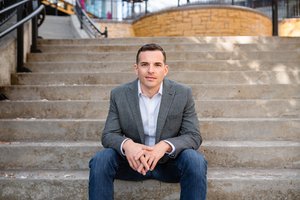
Jason “Buzz” Lewis is a retired U.S. Army Lieutenant Colonel, coach, mentor, and leadership practitioner with more than 26 years of experience developing people and leading organizations. Today, he serves through youth sports, faith-based leadership development, and business consulting while co-founding Home Team Standard alongside his wife, Des. His passion is helping strengthen the homes, teams, and relationships that shape future leaders.