
As we continue on our journey to overcome failure. In this episode, I’m going to arm you with the E and the A in our acronym leader fail. Remember one key fact: failure only happens when you decide to stop moving forward. The key here is to Exclude yourself and take inspired Action. To maneuver around life's obstacles takes intentional Action over a long period.
Too often, people stop at the first sign of discomfort. Why? Because we feel sorry for ourselves. We fall prey to the Karpman Triangle and say, " Poor me. We subconsciously understand what it takes to win, but choose to blame others rather than the purposeful Action required.
Here is a fun fact! Did you know that Americans spend an average of 19 days being consistent on their New Year's resolutions? Go even deeper. One out of three Americans is actually excited about change in their lives.
When starting something new, you have two choices. To view it as day one or one day. Here are 7 ways to exclude yourself and take inspired Action.
Reflection Question: Where in your life have you been waiting on motivation to show up—when what you really need is action?
Action Removes Fear
Let's first define what fear is not. Fear is not finding excuses and reasons to take Action. Fear is not facing expectations and running. Fear is facing everything and rising. I just provided you with an acronym for fear!
When we take inspired Action, it can be scary. But that is a good thing. Being scared creates cortisol in our bodies and means we care. If you care, you deserve to give 100% of your effort.
In airborne school, I had to overcome my fear of heights. Being in my first firefight, going on my first tactical air assault, and being in charge of men and women were all things that scared me and filled me with fear.
No amount of training was going to calm my nerves, but I learned something about myself. At that point in my life, I was physically depleted after graduating from Ranger school. Being in that physical condition helped me block out that little voice we all have.
The voice that tells us this is crazy; you are about to jump out of a perfectly good aircraft! I will never forget the first time the plane took off down the runway. I looked around at the other soldiers' faces. They realized that the only way off that aircraft was to jump.
I was too tired and fighting to stay awake while others were building up cortisol to unhealthy levels. Eventually, a soldier asked me why I was not afraid. I looked at him and said I was. But my faith in my equipment, training, and self was more significant than the fear.
To conquer fear, get out of your head and stop negative self-talk; believe in yourself. Human beings are capable of extraordinary feats when willing to take courageous Action. Purposeful accountable leaders (PALs) believe in themselves and, as a result, turn fear into a tool to overcome failure.

What action are you avoiding right now because it scares you—and what would change if your faith in yourself became greater than that fear?
Avoid Contentment
In the military, one of the most dangerous times during an operation is coming back. The mission has already been accomplished at that point, and all that is left is to return home. But that is when the enemy chooses to get a vote.
Life is waiting to exploit our weaknesses, and it's up to us to avoid contentment. It's easy to stop trying if we say, oh well, I gave it my best effort. Or worse yet, we succeed; somewhere, we become complacent and lose what we've gained.
To overcome failure, avoid contentment that breeds complacency. Once you become complacent, you lower your standards. Complacency means death on the battlefield. If you want to achieve results, see it through to the end.
Pat Riley stated complacency is the last hurdle between any team and its potential greatness. Do not allow contentment to breed a complacent heart. PALs understand that contentment can cause a false sense of security and choose to see it through.
Reflection Question: Where have you started to settle—lowering your standards—and what does “see it through” look like for you right now?
Understanding Failure Is A Season
John C. Maxwell says when achievers fail, they see it as a momentary event, not a lifelong epidemic. That's just it; failure is a season that will come and go.
When we are in the fight, it seems overwhelming to the point of questioning why try. But in those times, you need to remember the rule of traction. If you want to grow in life, you must create friction. Friction is caused when we encounter resistance.
Just remember that those intense moments will pass, they will become more accessible, and you will thank yourself for not quitting. Carl Yung stated what we resist will persist!
There is a concept in manufacturing engineering called the learning curve efficiency. The first time we try something, it's going to be painful. But with frequency, you will eventually find efficiencies and ultimately be able to complete the task much faster. Eventually, if you can weather the storm, you will achieve peak performance.
When you are confronted with failure or challenging times, take it one day at a time. Whenever I was in a long-standing problem that took me away from my family. I always viewed it as one day at a time. PALs understand tough times will happen and have the discipline to push through.

Are you treating this as a permanent identity—or a season—and what does “one day at a time” look like for you in the next 24 hours?
Ensure Your Vision Is SMARTS
A critical step in avoiding failure is ensuring your goals are achievable. If your goal is unrealistic, no amount of hard work and dedication will get you across the finish line.
In 1981, George Duren, Arthur Miller, and James Cunningham developed the SMART acronym. The S stands for specific. Is your goal specific enough to achieve? The M stands for measurable. Is your goal quantifiable in any way? The A stands for attainable. Do you have the capacity to attain your goal?
The R stands for realistic. This, in my opinion, is the hardest to determine. Humans are made for incredible things. Look at the Wright brothers and how far we've come from that first flying machine.
Finally, the T stands for 'timely' or 'time-based'. Do you have a date? Setting dates to achieve a goal acts as a contract with yourself.
However, I want to add one last word: shared. There is power in writing down goals and placing them on the calendar, but we lack accountability. Once the outcome has been solidified, share it. Doing so allows others to help you stay the course and openly declare your intent. It's significantly harder to fail if you publicly share what you want to achieve.
Just look at me; I'm an active-duty Army officer, and I boldly declare my mission to create better leaders and end toxic leadership practices. PALs set smart goals, oriented towards growth, then share them with others.
Reflection Question: What goal do you need to make specific, measurable, and time-based—and who do you need to share it with so you don’t drift?
Master Your Strengths
A recurring theme I've discovered is that great leaders are not jack-of-all-trades. Great leaders are focused, intentional, and purposeful with their actions. I believe it's because they understand their strengths and work to master them.
If you work with strength, you're tapping into the Pareto principle. The Pareto Principle states that 20% of our efforts will produce 80% of our results. Spending 20% of our time working on weaknesses drains our motivation to drive forward at challenging times. At the end of that investment, the best we can achieve is being average.
We are naturally weak because we are not mentally and emotionally aligned to become great. Reflect on a past position that required attributes foreign to you. It was significantly more complicated and, most importantly, was not enjoyable.
That's when failure will strike, that is dawn on the battlefield, and the enemy is preparing to attack. When those times occur, you will not have the stamina to keep up the fight. To avoid getting inside your head, learn what your strengths are.
There are countless resources to help you discover your strengths, including a coach like me. Once you identify your strengths, work on mastering them. When dawn approaches, you will be ready, able, and willing to meet your enemies on the battlefield. PALs are students of growth and seek self-discovery.

What strength do you need to double down on—and what weakness have you been over-investing in that keeps pulling you toward average?
Embrace The Possibilities
Life, leadership, and the human condition are not linear. There will be detours, dead ends, and U-turns we never see coming. When life requires a pivot, do not let those demons on your shoulder tell you to stop.
Thomas Edison failed 10,000 times when inventing the lightbulb. Each time he learned more and tried something different. Eventually, he illuminated the world. Edison brought light to some of the darkest places this world has seen.
It's easy to stop when faced with adversity, but remember, each roadblock is a teachable moment. Take those lessons and determine your next moves.
In life, the only perfect plans are those written in textbooks. Unfortunately, we live in the real world, and failure is inevitable.No one else is going to rescue you or solve your problems. PALs embrace the possibilities, learn from failure, and try again.
"Life is a series of outcomes. Sometimes the outcome is what you want. Great! Figure out what you did right. Sometimes the outcome is what you didn't want. Great! Figure out what you did so you don't do it again." John maxwell
Reflection Question: What pivot are you resisting—and what lesson is this roadblock trying to teach you before you take your next step?
Maintain Positive Attitude
Our attitude determines the quality of our work. But the definition of attitude is the way we think. Those thoughts grow into beliefs and lead to self-sabotaging Action. Stop and readjust your attitude before acting.
In 2011 I was selected to lead a squad live fire exercise with a diverse group of officers. Some of those officers were from foreign countries, such as Lebanon. As the day continued under the brutal humidity Fort Benning was known for, I repeatedly failed to complete our iteration.
I thought the best thing for the team was to replace myself. But my non-commissioned officer pulled me aside and helped change my attitude. I was not failing; I was growing. In each iteration, we were improving, but we were not quite ready to fire live rounds.
I ended up accepting my situation, staying the night on the range while my friends went to their warm beds. I, however, helped lead my squad to the best live-fire iteration for our company.
Looking back, what helped me was my ability to view the problem holistically with guidance. What parts are facts that could not be changed, and what aspects were issues that I could affect? For example, I was going to stay the night regardless; that was a fact. An issue was that I could use that time wisely to plan and rehearse, or I could feel sorry for myself and repeat the same mistakes the next day.
When you isolate facts and issues, you can accept the situation and take inspired action. PALs, maintain a positive outlook, and never quit.

What “fact” do you need to accept, what “issue” can you influence, and how will you take inspired action instead of quitting?
Final Thoughts
We continue exploring how to overcome failure using the LEADERS FAIL acronym. First, I explained how L stands for Leaders walking a razor's edge using the power of persistence. This blog provided another example of E Excluding yourself, and A taking inspired Action.
The second way to overcome failure is not allowing it to settle in your heart. Once failure is allowed in, it grows like cancer and eventually causes you to stop taking action. Never let self-sabotaging thoughts occupy your mind.
We all have them, but when that happens, it's time to take a brief pause in life and realign our azimuth. Use the acronym STOP. Silence your mind, take a Tactical pause, observe the facts and issues, then pursue purposefully.
Move forward with a burning desire, the fire of God, to not quit. If you understand that failure comes with the changing seasons, avoid allowing contentment to settle in, and embrace life's possibilities, you will begin to grow. PALs understand their strengths and set SMARTS growth goals.
After Action Review (AAR)
1. Are you allowing fear to control you?
2. What is setting on your heart, and how can you liberate it?
3. Reflect on your previous failure. When the time came, what was your response?
Tales of Leadership Mission: To develop Purposeful Accountable Leaders by arming you with the tools
required to lead with purpose, integrity, and accountability.
More Exclusive Content


























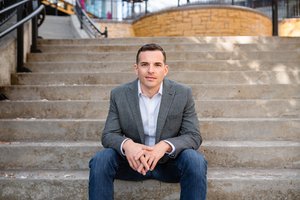
Jason “Buzz” Lewis is a retired U.S. Army Lieutenant Colonel, coach, mentor, and leadership practitioner with more than 26 years of experience developing people and leading organizations. Today, he serves through youth sports, faith-based leadership development, and business consulting while co-founding Home Team Standard alongside his wife, Des. His passion is helping strengthen the homes, teams, and relationships that shape future leaders.