Episode 28 Brandon Jenkins
Leadership, Resilience, and Financial Readiness
Tales of Leadership | Episode 28 | Brandon Jenkins
In this episode of Tales of Leadership, Joshua McMillion sits down with Brandon Jenkins, a retired Naval officer, MH-60 Romeo helicopter pilot, real estate investor, and founder of One Life Insurance LLC. Brandon’s story blends military leadership, financial growth, and personal development into one clear message: leadership is about making the people around you better. From the very beginning, Brandon frames leadership through the lens of teamwork. He explains that the best leaders are not simply the ones who hold authority, but the ones who improve the team by helping others grow, solve problems, and align around a shared mission. The best leaders make the people around them better.
Brandon talks about how that definition has evolved throughout his Navy career. Early on, leadership looked more like authority and responsibility. Over time, it became more about influence, trust, and helping others step into their own potential. He emphasizes that a leader cannot be everywhere at once, so the real goal is to create a team where people at every level understand the mission, carry the philosophy forward, and are trusted to act. This is where his thoughts connect to the idea of mission command. Delegating authority is not about avoiding responsibility. It is about building a stronger and more resilient team by giving the right people ownership within the right boundaries. Delegation is not about giving work away—it is about developing people and building resilient teams.
A major theme throughout the conversation is humility. Brandon makes it clear that leadership growth starts by understanding that you will never know everything. He reflects on his early days in the Navy and how important it was to show up with a learning mindset. Rather than pretending to have all the answers, he learned to ask what he could learn from every role, every mentor, and every challenge. That humility allowed him to absorb lessons, improve his craft, and eventually lead others more effectively. A humble leader learns faster, grows faster, and leads better.
Joshua and Brandon also spend significant time discussing the importance of self-leadership. Before someone can effectively lead a team, they must know who they are, what they value, and how they want to show up. Brandon shares how powerful it was for him to get clear on his core values, his why, and the type of leader he wanted to be. He credits coaching with helping him think more deeply, reflect more intentionally, and align his decisions with who he actually is rather than just reacting to circumstances. You cannot lead others well until you know who you are and what you stand for.
That clarity became especially important when Brandon moved into command. He talks about taking over a squadron and realizing that effective leadership in those moments starts long before the first briefing or command speech. It starts with the hard internal work of getting clear on your philosophy, your values, and your approach. From there, he brought in his inner team, gathered feedback, and refined the vision before trying to lead the larger organization. Once in command, he did not want his philosophy to be just a statement on the wall. He made it practical by getting out of the office, walking through the workspaces, talking to people, listening to pain points, and staying connected to the pulse of the unit. If your leadership philosophy only exists on paper, it is not leadership.
Another key lesson from the episode is that leadership operates in the gray. Brandon explains that there is rarely a perfect checklist for leadership problems because people, teams, and missions are too complex for that. Technical processes matter, but human systems require judgment, awareness, and flexibility. That is why feedback is so important. The higher someone rises in leadership, the easier it becomes for honest feedback to disappear. Brandon emphasizes the need to create space for truth, to stay connected to the team, and to intentionally seek out what is really happening in the organization before small issues become major failures. Leaders must create feedback loops because leadership problems rarely come with a checklist answer.
The conversation also moves into financial leadership and personal responsibility. Brandon shares how his interest in real estate and financial strategy began with a personal realization that the way he was managing money was not aligned with the life he wanted to build. That experience sparked a new path of learning, investing, and eventually helping others. For him, financial readiness is not separate from leadership. It is another area where intentionality, discipline, and long-term thinking matter. That is also what drew him into the War Room mastermind, where accountability, consistency, and shared growth continue to sharpen him. Financial growth, like leadership growth, starts with ownership and intentional learning.
Brandon returns often to the importance of strong teams. Whether in the military, in business, or in personal development, he believes that growth happens best when people surround themselves with others who will challenge them, support them, and hold them accountable. That is why he values mastermind communities so much. It is also why he keeps coming back to resilience. Plans matter, but life always gets a vote. The best teams are not the ones with the prettiest plan on paper. They are the ones that can adapt, recover, and keep moving when circumstances change. Resilience is what keeps a team moving when the plan gets punched in the face.
By the end of the episode, Brandon’s message is clear. Leadership is not about titles, control, or personal success. It is about humility, learning, trust, feedback, resilience, and making the people around you better. When leaders know themselves, stay teachable, and stay connected to their teams, they create organizations that are capable of far more than any one person could ever accomplish alone. Great leadership is the constant work of developing yourself so you can better develop others.
Final Thoughts
This episode is a reminder that leadership starts with self-awareness and grows through humility. Brandon Jenkins shows that the strongest leaders are not the ones pretending to know it all. They are the ones who stay grounded, stay curious, and stay committed to making their teams better. His reflections on mission command, feedback, resilience, and personal development all point to the same truth: leadership is about building trust and multiplying strength in others. If you want to lead well, start by doing the hard work on yourself and then use that growth to lift your team.
After Action Review
Am I delegating in a way that develops my team, or am I just trying to get work off my plate?
What feedback loops do I have in place to make sure I know what is really happening in my organization?
Have I done the internal work to clearly define my values, my why, and the kind of leader I want to be?
Tales of Leadership Mission: To develop Purposeful Accountable Leaders (PAL)
by arming you with the tools required to lead with purpose, integrity, and accountability.
More Exclusive Content
ason Lee Sharp’s story is one of hardship, discipline, service, and transformation. Raised in Chicago amid drugs, homelessness, and the pull of the streets, Jason learned early that suffering could either break him or build him. Today, he is a businessman, author, soldier, mentor, and leader dedicated to helping others turn adversity into strength.
In this episode, Jason shares how his challenging childhood shaped his mindset, how military school redirected his life, and how leadership became the throughline of his journey. From founding Sharp Leader and Sherris Lounge to serving as an infantry company commander in the Kansas Army National Guard, Jason’s path reveals what it means to stay alert, endure pain with purpose, and grow through discomfort.
We also dive into his book, Eyes Wide Open: Learning to Suffer, his work with youth through gritKC, and the lessons he has learned about mentorship, resilience, and choosing growth when life gets hard.
Too often, people stop at the first sign of discomfort. Why? Because we feel sorry for ourselves. We fall prey to the Karpman Triangle and say, " Poor me. We subconsciously understand what it takes to win, but choose to blame others rather than the purposeful Action required.
In this solo episode of Tales of Leadership, Joshua McMillion breaks down what it truly means to be “all in” as a leader, husband, parent, teammate, and human being. Leadership is not built in comfort. It’s forged through adversity, discipline, accountability, and the willingness to move forward even when life feels heavy. Joshua shares the mindset and routines that have helped him navigate pressure, uncertainty, failure, and toxic leadership environments while staying committed to a mission bigger than himself. This episode challenges listeners to stop waiting for the perfect moment and start taking purposeful action right now.
David Brown is a graduate of BUD/S class115 and member of Underwater Demolition Team 21 and SEAL Team 4. David went on to conduct Navy special warfare deployments in Central and South America, Europe the middle east and Africa. Later he served the federal government as a Special Agent for 28 years, retiring as a Senior Executive. David’s latest venture is a new book about perseverance, overcoming obstacles, and becoming a Navy SEAL by former Navy SEAL David "Brownie" Brown and NY Times Bestselling author Bob Gettlin.
Joe Byerly is a combat arms officer with over 20 years of experience in both combat and training environments, serving at levels ranging from the tactical to the strategic. Passionate about leader development, he created this platform to help leaders share lessons learned from their own experiences, captured in their "green notebooks." Throughout his career, he has been fortunate to have mentors who encouraged him to read, write, and publish. Joe has contributed articles to notable publications such as ARMY Magazine, Military Review, Strategy Bridge, Small Wars Journal, Task and Purpose, and Foreign Policy. Featured on Forbes and a frequent guest on leadership podcasts, Joe has also spoken at prominent events, including the Annual AUSA Conference, the Future of War Conference, and the Defense Entrepreneurs Forum Annual Conference.
Brad D. Smith became president of Marshall University in January 2022 after a globally recognized career in leadership and philanthropy. Formerly CEO and executive chairman of Intuit, Brad co-founded the Wing 2 Wing Foundation with his wife, Alys, to support education and entrepreneurship in Appalachia. The foundation's Ascend WV program recruits remote workers to West Virginia. A Marshall alumnus with a bachelor’s in business administration, Brad is committed to empowering future leaders. A proud “boy from Kenova,” Brad champions opportunities for his home state and its people.
Mike has dedicated his career to higher education, serving as a football coach, instructor, and administrator at multiple colleges and universities. Throughout his tenure, he contributed to several conference championships, coached numerous All-Conference and All-American athletes, and mentored countless current teachers and coaches across the Midwest and beyond. As the President and Founder of Via Crucis Leadership, LLC, Mike is a dynamic speaker who brings passion, humor, and heartfelt stories to audiences. He emphasizes essential leadership skills based upon his “Handful of L’s” as a foundation for those striving to navigate and lead in today’s complex, “Chaordic” world (forces of chaos & order colliding). Guided by his mission of “1-0 Every Day in Every Way: Living life creating a transformation of self and others.” Mike inspires individuals to unlock their potential, embrace resilience, and foster meaningful change in themselves and others. Mike also serves as the President of the Chris Norton Foundation and was featured in the acclaimed documentary “7 Yards.” He holds a Doctor of Ministry degree and continues to lead with purpose and impact.
Ben Eden is a keynote speaker, leadership consultant, and the creator of the Eden Model, a transformative framework designed to help high-achieving leaders evolve from the inside out. With a background as an HR executive and as the author of How We See Ourselves, Ben has developed a unique ability to guide successful business owners and corporate leaders who, despite their outward achievements, seek greater clarity, balance, and fulfillment. Ben specializes in helping those who carry the weight of performance realign with their true selves, enabling them to lead with increased confidence, deeper connections, and greater time freedom. His work combines practical leadership wisdom with profound insights into personal identity, making him a sought-after guide for leaders looking to make meaningful transformations.
Robert Yarnall is the VP of Development & Impact at the Robert Irvine Foundation. A retired Master Gunnery Sergeant with 25 years of service in the USMC, Robert also spent 20 years as a civics teacher and coach. In addition to his military and teaching career, he is a community leader, involved in local government and charitable organizations, and a small business owner.
Isaac G. Lee, a native of Lubbock, Texas, is a graduate of Texas Tech University and a retired Marine Corps officer and aviator. Over his two decades of service, Isaac completed seven overseas deployments, including four combat tours in the Middle East. He served as the Commanding Officer of an operational CH-53E squadron before retiring in 2017. Now residing in San Diego, California, Isaac works as an operations executive and dedicates his free time to volunteering for fellow veterans and enjoying time with his family. A fan of baseball and football, Isaac is also the author of HANGAR 4, his first book.
Dave Rosenberg, a former F-14 naval officer and founder of Locked on Leadership, is a top authority on radical accountability. As the premier expert in this field, he equips military-minded leaders with tactical strategies to build high-performance teams that exceed expectations. His approach goes beyond transforming individuals into self-directed achievers; it fosters a culture of excellence that remains mission-ready long after motivation fades.
Dr. Christina Bates is a mom to two sweet girls, an entrepreneur, a leader, and an animal lover with three dogs, two cats, one bunny, and one guinea pig. Passionate about all things military, especially weapons systems, she is dedicated to helping leaders and organizations excel and realize their full potential. She believes that God has a purpose for each of us, and in small but impactful ways, she supports leaders and members of organizations in living out that purpose.
Rob Roy is a 25-year veteran of the U.S. Navy, with 21 years of service in the SEAL teams, including over a decade with the elite SEAL Team Six. After retiring, he transitioned to entrepreneurship, founding Trident Coaching and Consulting to deliver transformative leadership programs. Rob is an award-winning executive coach, a sought-after public speaker, and the author of Leadership Lessons of the Navy SEALs: The Art of War. His leadership training programs, including "Leadership Under Fire" and "Battlefield to the Boardroom," have received accolades, including multiple YPO-WPO BEST of the BEST awards. Rob's insights on leadership, resilience, and team-building have been featured on Bloomberg TV, Fox News, and NBC.
Lieutenant Colonel Michael Brabner’s journey from infantry combat leader to military robotics innovator shows how leadership can transform even the largest organizations. In this episode, he shares raw lessons from combat, where the absence of simple tools like soldier-borne sensors cost lives, and how those experiences fueled his drive to reshape the military’s approach to unmanned systems. Brabner reveals how visionary leadership—rooted in Boy Scout values, hardened in Ranger School, and tested in combat—has turned fragile, expensive assets into modular, mission-ready tools that give soldiers a decisive edge. His story is a powerful reminder that disruptive change requires both innovation and leaders willing to challenge the status quo.
To overcome failure, you must first change how you see it. In this powerful entry of the Anti-Fragile series, we explore how the Power of Perspective (POP) transforms failure from a stopping point into a starting line. Drawing from military leadership, personal stories, and timeless wisdom, this article reveals eight practical truths that help leaders build unshakable mental resilience. You'll learn how to train with intensity, embrace failure as a cycle of growth, remove excuses, and develop a battle plan grounded in purpose and persistence. Whether you’re in the fog of uncertainty or facing your next big decision, this is your call to shift perspective, take action, and become the leader your team needs.
Nestled in the foothills of Charlottesville, Virginia, Aerial Resupply Coffee emerges as a testament to service and community. Founded by U.S. Army Veteran Michael Klemmer, this brand embodies a dedication to honor those who serve. After a 20-year military journey and global exploration, Mike returned to Charlottesville with a passionate mission—to brew coffee that mirrored their values. This Charlottesville Coffee isn't just about premium roasts; it's a tribute to veterans, first responders, active military, and their families. Aerial Resupply Coffee fosters a community that cherishes both exceptional coffee and a shared commitment to service. Each carefully crafted blend tells a story of unwavering dedication, honoring the heroes and their supportive families.
From Army Ranger to chaplain, Dr. Anthony Randall shares powerful lessons on character-based leadership, coaching culture, and embracing work-life rhythm over balance. This episode explores the soul of transformational leadership—and why prudent risk is essential for growth in any arena.
Failure isn’t what you think it is. Before you can lead through it, you have to redefine it. In this article, I break down the seven myths of failure using the acronym FAILING—from believing it's avoidable to thinking it's gone forever. Whether you're leading yourself, your family, or a team, this is the mindset shift you need to turn setbacks into momentum.
Ryan is a serial entrepreneur and life long learner that enjoys the pursuit of business while being a positive influence in his community and using his business platforms to help support causes he’s passionate about. He started 10th Mountain Whiskey & Spirit Company 10 years ago and is in the trenches running the daily operations with the goal of becoming a national, household brand. He has also owned a restaurant for the past 22 years and has owned a motel for 8 years…both of which are still in operation. He is passionate about using his business acumen to help support fellow entrepreneurs and is always keeping his eyes open for the next opportunity.
SGM Derek Kearns shares hard-won lessons from over two decades in the Army—covering attention to detail, adaptive leadership, and investing in people. From combat zones to Ranger School, this episode unpacks what it really means to lead with purpose under pressure.
Doing good work doesn’t require a title, permission, or perfection—it requires action and alignment.
In this article, Joshua McMillion breaks down a simple yet powerful framework for living a meaningful life through three key steps: discovering your passion, defining your purpose, and living out your assignment. Drawing from military experience, personal reflection, and years of leadership, this piece challenges readers to stop waiting and start leading—right where they are.
If you’re ready to live with conviction and do work that matters, this is your call to action.
What makes a truly exceptional leader?
Is it position, authority, or something deeper? In this profound conversation with Joseph Polanin, retired Navy Captain and award-winning CEO, we uncover leadership wisdom forged through 30 years of leading elite teams in high-risk environments across more than 1,000 combat missions.
Joe reframes leadership in a way that will transform how you view your role: "Leadership is not a position, rank, or title. It's a process of learning, growing, and caring about other people." This powerful perspective has guided his journey from Naval Academy graduate to commanding EOD units worldwide, where the ethos of "quiet professionalism" – doing what's right regardless of who gets credit – became his north star.
What does it take to reach the absolute pinnacle of military leadership? Command Sergeant Major (Retired) John Wayne Troxell brings wisdom forged through 38 years of service and five combat deployments to this riveting conversation on transformational leadership.
As the former Senior Enlisted Advisor to the Chairman of the Joint Chiefs of Staff—the highest position an enlisted service member can achieve—Troxell reveals his leadership framework built on the “three Ps”: presence, performance, and persistence. He explains why simply showing up isn’t enough. True leadership presence generates energy and inspiration. Performance means living out the standard, especially in adversity. Persistence is the grit to lead with both compassion and accountability.
From his humble beginnings to delivering a viral “surrender or die” message against ISIS, Troxell shares hard-earned lessons in resilience, authenticity, and leading under fire. Even under suspension, he stood firm in his convictions, later returning to his post with his values intact.
In this episode, you’ll hear how great leaders balance toughness with humanity, communicate the “why,” and evolve across increasing levels of responsibility. Now in civilian life, Troxell continues his mission through entrepreneurial leadership—proving service doesn’t stop when the uniform comes off.
If you’re ready to lead with greater purpose, this episode delivers battle-tested wisdom that applies across every leadership arena.
Leadership in life is all about action! Being committed to moving the needle forward and understanding the work or sacrifice required to actually achieve results. That is also the burden of leadership; it takes an engaged, purpose-filled leader to create traction. I find myself falling back to a verse, Jeremiah 29:11: "For I know the plans I have for you, declares the Lord, plans for welfare and not for evil, to give you a future and a hope." These words are true, but one critical piece is missing that I've learned: If it's to be, it's up to me. No one will do the work for you. You may be in the right place at the right time and have the right job or influence—but do you have the intestinal fortitude to put in the work and achieve results?
When leadership fails, it's rarely about strategy – it's almost always about what lies beneath the surface. In this profound conversation with Dr. Ron Stotz, we explore the hidden dimensions of leadership that most development programs miss entirely.
Dr. Stotz brings a remarkable perspective forged through military service during Vietnam, a suicide attempt that became a spiritual awakening, and decades helping high-level leaders break through their limitations. His journey reveals how our early childhood experiences shape our leadership capacity in ways we rarely recognize until everything begins to crumble.
In this powerful episode of Tales of Leadership, I sit down with Jake Larson—affectionately known as “Papa Jake”—a 102-year-old World War II veteran and national treasure whose story has captivated millions across the world.
Born during the Great Depression and raised on a farm in rural Minnesota, Jake’s journey took him from poverty to the front lines of history. At just 15 years old, he joined the National Guard by lying about his age. That bold decision would place him on the path to help plan the D-Day invasion as part of G3 Operations. Armed with a skill most overlooked—typing—Jake was responsible for processing the very orders that sent thousands of men onto Omaha Beach, including himself.
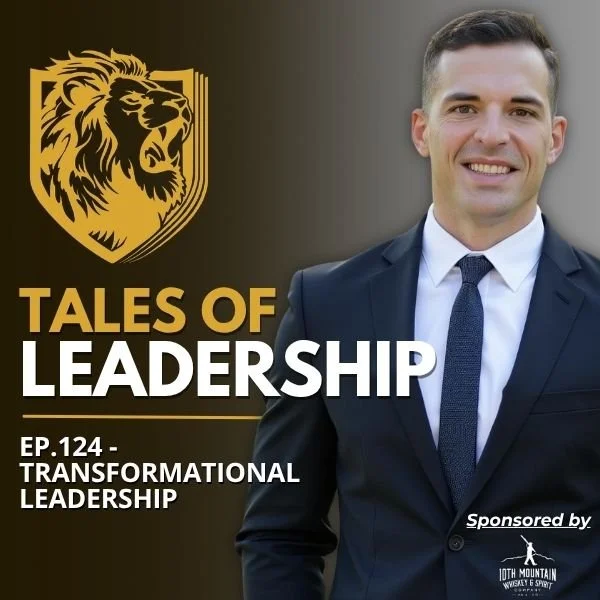
Transformational leadership is the second path less traveled by leaders in today's world. This path requires you to place the needs of others over your own. It demands routine, accountability, and discipline (RAD) in your actions. It inspires those around you to be better. When leaders choose this path, they sacrifice temporary success for a life of significance. To be a transformational leader, you must possess specific leadership characteristics. This blog aims to equip you with the top 10 ways to become a more transformational leader or a Purposeful Accountable Leader (PAL).
Lon Stroschein is the founder of Normal 40 and best selling author of the book, “The Trade.” He has been privileged throughout his career to collaborate with outstanding leaders, contributing to the growth of those around them. His professional journey encompasses crafting international expansions, leading a $100 million division, orchestrating a significant $2.1 billion public-to-public transaction, founding a successful private wealth group, and dedicating five impactful years serving the United States Senate.
In today's episode, we shed light on the perils of transitional leadership and its detrimental impact on teams and organizations. We delve into how this leadership style often prioritizes profits over people, leading to toxic workplace cultures and high turnover rates. Our host, Joshua K. McMillion, draws on his extensive experience in military leadership to share key insights.
Tales of Leadership exists to equip leaders to step into the arena, lead with accountability, and become the leaders this world needs.
Lead with purpose
Live with integrity
Make an inspired impact
Explore podcasts, articles, and practical leadership resources designed to help you grow into a more Purposeful, Accountable Leader.
Your journey starts here.
Learn how purposeful, accountable leaders (PALs) overcome failure by taking ownership, using the STOP framework, controlling emotions, addressing problems quickly, and building an inner circle that demands growth. This article in the LEADERS FAIL series explains why accountability is the bridge between failure and leadership growth.